
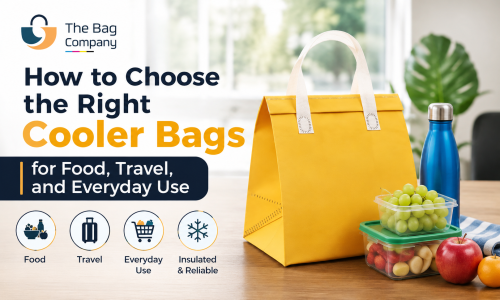
Keeping food and drinks at the right temperature can make travel, work, picnics, shopping, and outdoor activities far more convenient. A well-designed insulated bag protects contents from external temperatures while offering a portable alternative to bulky containers. However, selecting the right option requires more than choosing an attractive design. Size, insulation, lining, durability, portability, closure quality, and intended use all influence performance. The Bag Company focuses on practical bag solutions designed around different carrying and storage requirements. Knowing which features matter can help buyers select a bag that fits both routine and specialised needs.
What Are Cooler Bags?
Cooler bags are portable insulated carriers designed to help maintain the temperature of food, beverages, medicines, groceries, and other temperature-sensitive items for a certain period. Unlike rigid ice boxes, they usually feature flexible or semi-structured construction, making them easier to carry, store, and transport.
Most designs use multiple material layers. The outer layer provides strength and protection, the middle insulation slows heat transfer, and the inner lining creates a suitable surface for storing packed food and beverages.
People use these bags for office lunches, family outings, road trips, grocery shopping, food delivery, picnics, sporting activities, camping, and other situations where temperature control matters.
Why Does Choosing the Right Bag Matter?
Two insulated bags may look similar while delivering completely different levels of performance. Material thickness, insulation density, zipper construction, lining quality, stitching, and overall structure influence how effectively a bag performs.
Choosing an unsuitable size can also cause inconvenience. A small lunch carrier cannot serve the same purpose as a large family picnic bag. Similarly, carrying an oversized insulated bag for one meal adds unnecessary weight and bulk.
The right selection should balance storage capacity, temperature retention, portability, cleaning requirements, durability, and expected frequency of use.
Start by Identifying the Main Purpose
Before comparing designs, determine what you plan to carry most often. Intended use provides the clearest starting point because different situations create different requirements.
An office employee may need space for lunch boxes, fruit, snacks, and one beverage. A family travelling by car may require substantially more capacity for meals and drinks. A food business may prioritise durability, hygiene, and repeated handling.
Consider three questions before making a selection:
- What items will you usually carry?
- How long should they remain cool or warm?
- How frequently will you use the bag?
Clear answers make it easier to evaluate size, construction, insulation, and carrying style.
Choosing Cooler Bags for Food Storage
Food storage requires attention to insulation and hygiene. Packed meals should remain protected from excessive external heat, particularly when travelling for several hours.
Look for sufficient insulation around the base, sides, and lid. Consistent insulation provides better protection than designs that use padding only in selected areas.
The interior should also allow convenient cleaning. Food containers can leak, beverages can spill, and condensation may accumulate around chilled products. A wipe-clean lining helps maintain hygiene and reduces maintenance effort.
The bag should provide enough space to organise containers without crushing them. Structured designs can be particularly useful when carrying lunch boxes, bottles, fruits, desserts, or delicate packed items.
Selecting a Bag for Travel
Travel places different demands on an insulated carrier. Portability becomes especially important because travellers may need to carry the bag between vehicles, railway stations, airports, hotels, picnic locations, or outdoor destinations.
For shorter trips, compact shoulder bags or tote-style designs can work well. Longer road journeys may require larger models with additional storage space.
Check handles and shoulder straps carefully. Reinforced handles help support heavier loads, while adjustable straps can improve carrying comfort. Wide straps may distribute weight more effectively when the bag contains multiple bottles and food containers.
Travellers should also consider how easily the bag fits inside a car, luggage compartment, or other available storage area.
Cooler Bags for Everyday Use
Everyday requirements usually call for a balance between compact dimensions and useful capacity. People may carry lunch to the office, transport chilled groceries, take snacks to school activities, or keep drinks cool during local journeys.
A practical everyday bag should remain lightweight when empty and manageable when loaded. It should also open easily, provide sufficient internal space, and require minimal cleaning effort.
Neutral designs often work across multiple settings. A bag that suits work, shopping, short trips, and casual outings may provide greater long-term value than one designed for a highly specific occasion.
Consider the Right Size and Capacity
Size directly affects convenience. Before choosing a bag, estimate how many containers, bottles, cans, ice packs, or other products you expect to carry.
Small Bags
Small insulated bags suit individual lunches, snacks, medicines, or a few beverages. Their compact shape makes them easy to carry and store.
Medium Bags
Medium-sized options can accommodate several containers, beverages, and ice packs. They often work well for couples, small families, day trips, office use, and picnics.
Large Bags
Large-capacity designs suit family outings, group events, road trips, catering requirements, and situations involving greater quantities of food and beverages.
Avoid choosing capacity solely by external dimensions. Insulation thickness and internal compartments can reduce usable storage space, so internal measurements also deserve attention.
Pay Attention to Insulation Quality
Insulation forms the functional core of an insulated bag. Its purpose is to slow temperature exchange between the contents and surrounding environment.
Thicker insulation can often provide stronger thermal protection, but thickness alone does not determine performance. Material quality, construction, closures, and the overall bag structure also matter.
Good insulation should cover the major surfaces of the storage compartment consistently. Weak areas around the lid, corners, or seams may allow heat to enter more quickly.
Users who frequently travel for extended periods should generally place greater importance on insulation performance than people who need a bag only for short journeys.
Check the Inner Lining
The lining comes into close contact with packed food containers, bottles, moisture, and condensation. It therefore plays an important role in usability and maintenance.
Choose a lining that:
- Wipes clean without excessive effort
- Resists normal moisture exposure
- Has well-finished seams
- Does not tear easily
- Supports repeated use
Smooth interiors usually make cleaning easier. After use, remove food residue and moisture before storing the bag. Allowing the interior to dry properly can also help prevent unwanted odours.
Examine the Outer Material
The exterior protects the insulation and internal contents from everyday handling. It should tolerate carrying, loading, storage, and occasional contact with rough surfaces.
For frequent use, look for strong fabric, reinforced stitching, dependable handles, and durable connection points. The base deserves particular attention because it often experiences the greatest wear.
A stronger exterior becomes even more important for travel, delivery, outdoor use, or professional applications where bags face repeated handling.
Look Closely at Zippers and Closures
A quality insulated body cannot perform effectively if the closure leaves significant gaps. Zippers should move smoothly and close the compartment securely.
Inspect zipper tracks, pullers, stitching, and corners. Frequent opening and closing places considerable stress on these components.
A properly closing lid also reduces unnecessary exposure to outside air. Users can support temperature retention by limiting how often they open the bag during travel.
Evaluate Handles and Shoulder Straps
Carrying comfort can become a major issue once the bag is fully loaded. Bottles, packed meals, ice packs, and groceries can add substantial weight.
Short handles suit quick carrying, while shoulder straps can make longer journeys more comfortable. Some designs provide both options.
For heavier loads, check whether straps connect securely to reinforced sections of the bag. Weak attachment points can reduce product life even when the main body remains in good condition.
Consider Compartments and Organisation
One large compartment offers flexibility, but additional pockets and dividers can improve organisation.
Separate sections can keep napkins, cutlery, keys, dry snacks, and other accessories away from chilled items. Bottle holders may prevent drinks from moving excessively during transport.
However, excessive compartmentalisation can reduce usable internal capacity. Choose organisation features according to your actual carrying habits rather than simply selecting the design with the most pockets.
Think About Cleaning and Maintenance
Regular cleaning supports hygiene and extends usable life. Before purchasing, consider how easily you can access corners, seams, and the base of the interior.
After carrying food, empty the bag completely. Wipe spills promptly and follow the appropriate cleaning method for the materials used. Avoid storing the bag while its interior remains damp.
Users who carry meals every working day should give cleaning convenience particularly high priority because minor maintenance difficulties can become frustrating over repeated use.
Decide Whether You Need Ice Packs
Insulation slows temperature change, but it does not actively create cold conditions. Ice packs or other suitable cooling elements can help maintain lower temperatures for longer periods.
When estimating the required bag capacity, leave enough room for cooling elements alongside food and beverages. Overpacking can make closing difficult and reduce organisation.
Place cooling packs strategically around temperature-sensitive contents where practical. The ideal arrangement depends on the bag shape, quantity of food, journey duration, and surrounding conditions.
Consider Foldability and Storage
Storage space matters when the bag is not being used. Soft-sided options may fold or compress, making them convenient for homes, offices, vehicles, and luggage.
More structured models maintain their shape better and can protect packed containers from being crushed, but they usually require more storage space.
Choose between flexibility and structure based on how you use and store the product. Frequent travellers may appreciate collapsible construction, while users carrying delicate containers may prefer stronger structural support.
Choose According to Climate and Duration
External temperature affects how hard an insulated carrier must work. A short journey in moderate conditions creates different demands from several hours of travel during hot weather.
For longer journeys, prioritise insulation, secure closures, sufficient space for cooling elements, and durable construction.
Avoid leaving the bag unnecessarily in direct sunlight or inside a hot parked vehicle. Keeping it shaded and opening it only when necessary can support better temperature retention.
Consider Professional and Commercial Requirements
Businesses may evaluate insulated bags differently from individual users. Food delivery services, catering operations, hospitality businesses, retailers, and event organisers may require products that withstand repeated use.
Commercial buyers should assess durability, cleaning convenience, carrying capacity, ease of handling, and consistency across multiple units.
Branding may also matter. Custom printing can turn practical packaging into a visible brand asset during delivery, transport, events, and customer interactions.
The Bag Company can serve businesses looking for functional bag formats suited to different commercial applications and branding requirements.
Avoid Choosing Based on Appearance Alone
Colour and design influence buying decisions, but visual appeal should not replace functional evaluation.
A stylish bag with poor insulation, weak handles, or difficult-to-clean lining may quickly become inconvenient. Likewise, an inexpensive option may cost more over time if it requires frequent replacement.
Compare functional features first. Once several options satisfy your practical requirements, appearance can help determine the final choice.
Common Mistakes to Avoid
One common mistake involves buying a bag that is too small for ice packs and food containers together. Another involves choosing excessive capacity that makes everyday carrying uncomfortable.
Buyers may also overlook zipper quality, handle reinforcement, lining construction, and cleaning requirements. These details often determine how practical the bag feels after repeated use.
Another mistake involves expecting insulation alone to keep contents cold indefinitely. Actual performance depends on starting temperature, cooling elements, ambient conditions, frequency of opening, packing arrangement, and insulation quality.
How to Compare Quality Before Buying
Rather than focusing on a single feature, evaluate the entire construction.
Check the exterior fabric, stitching, insulation, lining, zipper, handles, shoulder straps, base, and internal layout. Consider whether these elements work together for your intended application.
A reliable product should feel practical both empty and loaded. It should provide enough space without unnecessary bulk and offer construction suitable for expected usage frequency.
For business orders, consistency also matters. Buyers may need uniform dimensions, appearance, printing quality, and construction across larger quantities.
Making the Final Choice
The best insulated carrier depends on where, how, and how often you plan to use it. Start with purpose, then evaluate capacity, insulation, lining, closures, portability, durability, cleaning requirements, and storage.
For individual meals, compact designs usually offer sufficient convenience. Family trips often require larger capacity and stronger carrying features. Professional users may need durable construction suitable for frequent handling and customised branding.
Instead of selecting solely by price or appearance, consider long-term usability. The right choice should make transporting food and beverages simpler while fitting naturally into your routine.
Conclusion
Choosing an insulated bag becomes easier when you match its features to a specific purpose. Consider how much you carry, journey duration, insulation quality, internal lining, closures, handles, cleaning needs, and storage requirements. A suitable design can support office meals, shopping, family travel, outdoor activities, and professional applications without creating unnecessary bulk. The Bag Company offers bag solutions for varied personal and commercial requirements, allowing buyers to prioritise functionality, durability, portability, and presentation when selecting an appropriate option.
FAQs
How long can cooler bags keep food cold?
The duration varies according to insulation quality, outside temperature, initial food temperature, ice packs, packing arrangement, bag size, and how frequently you open it. Strong insulation and properly positioned cooling elements can support temperature retention, while repeated opening and exposure to heat can shorten effective cooling time.
Can cooler bags be used for everyday office lunches?
Yes. Compact insulated bags work well for carrying office meals, beverages, fruit, snacks, and small containers. Choose a lightweight design with sufficient insulation, a wipe-clean interior, dependable zippers, and comfortable handles. Make sure the internal dimensions accommodate your usual lunch containers and any cooling packs you plan to carry.
Are larger cooler bags always better?
No. Larger capacity helps when carrying food for families, groups, travel, or events, but extra size can add unnecessary bulk for individual use. Choose capacity according to what you normally carry while leaving sufficient room for cooling elements. The most practical size balances storage space with comfortable transportation.